
Field Notes
How to Invest in Your Clan Feature to Get Real Retention?
Most mobile games treat clans as a grouping gimmick, a checkbox feature that costs them retention. A handful of studios, Scopely and EA's Capital Games among them, prove there's a completely different way to build one, and it comes down to one distinction: are members achieving something together, or just playing solo next to each other.
Ask most mobile studios why their game has a clan feature and you'll get the same answer: players expect it. Ask what the clan actually does beyond putting fifty strangers in one group, and there's less to say. A list of tasks to clear on your own. A leaderboard nobody cares about. That's not a social system. It's just a numbers game.
The studios that treat clans as a real retention tool build something different: challenges that don't clear unless people actually work together. Scopely and EA's Capital Games both do versions of this.
Working together, or just playing next to each other
Picture two players on the same clan leaderboard. One logs in, hits their own targets, and their score adds to the total, nobody needs to know their name for it to count. The other needs three guildmates online at the same time, a plan everyone agrees to, and a boss that doesn't die unless they execute it together. Both look like playing with a clan from the outside. Only one of them actually is. The other is just solo play disguised as a social feature.
What the leaders actually built
Look at what the top mobile studios ship, and the pattern is consistent: the reward stays big, but reaching it requires someone else to actually do something.
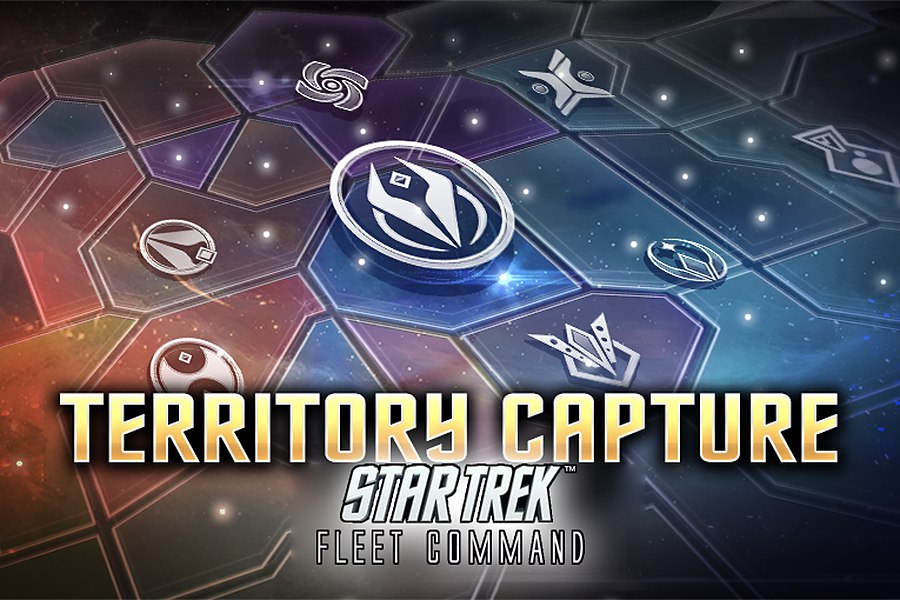
Scopely's Star Trek Fleet Command runs Territory Capture, where an alliance's zones need to stay connected to each other to keep the alliance-wide buffs those zones unlock active. That forces a real conversation inside the alliance: which zone to contest next, and who's responsible for it. It goes further at the top of a server, where the leading alliances make actual deals with each other, one alliance deliberately leaving a zone uncontested so an allied but weaker alliance can claim it, territory that ally could never have won on its own. That's coordination that goes beyond one alliance's own members, real diplomacy playing out across the whole server.
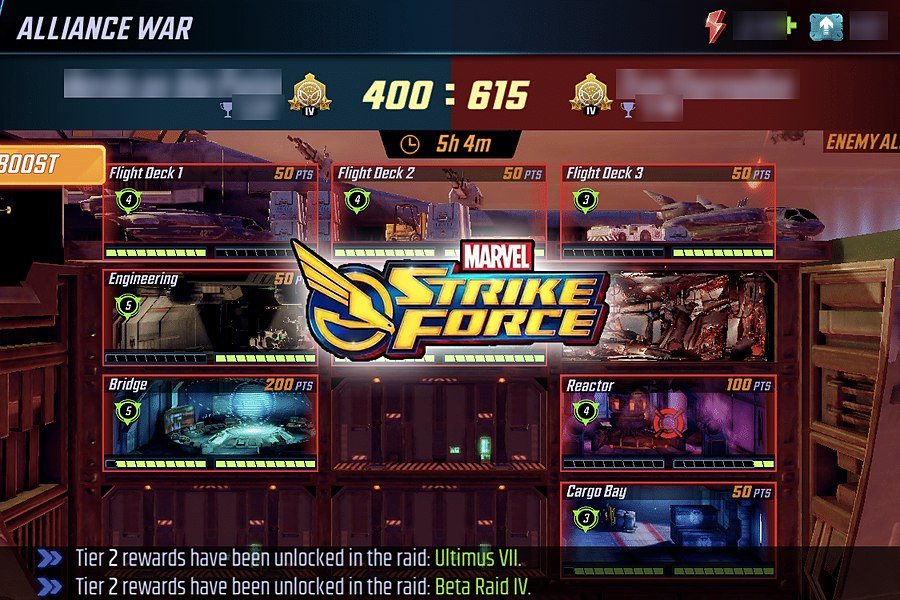
Marvel Strike Force builds the same split directly into its format. Every player prepares two separate rosters, one for defense, one for offense. The alliance's shared base is divided into rooms, and each room gives a different buff to whoever holds it. Some rooms are only worth points. Others matter far more: hold the strongest one and every defending room gets stronger too, lose it and the whole defense gets easier to break. That's why the alliance has to agree, together, on which rooms get its strongest defenders and which ones can run thin. Attackers work through the rooms in priority order too, which means an alliance can even choose to gut its own defense on purpose and go all in on offense instead, betting it can clear the enemy's base before the enemy clears theirs. Every one of those choices needs the alliance to agree on a plan first.
EA Capital Games' Star Wars: Galaxy of Heroes goes furthest on actual strategy. Territory War isn't a damage race, it's guilds setting a defense before the enemy guild attacks, real planning, real stakes if you get it wrong. The game also lets members directly donate gear to each other, a small mechanic, but genuine giving between two named players, not a shared pool.
Its Raids show the same idea at a smaller scale, and reveal something the game itself never asked for. Most raids only need the guild's combined damage to clear a boss, no different from a shared leaderboard. But its Rancor raid can be soloed by one strong enough player, and in the guild I played in, that turned into its own quiet system: our strongest members would deliberately bring one weak character, just enough to register and claim the minimum reward, so the top tier, the one with the rare character shards, went to whichever newer member didn't have that character yet. Nothing in the game asked us to do that. We decided it because the raid gave us the room to.
Hard challenges, not a simple ladder
The design principle underneath every good clan system is the same: pair a genuinely hard challenge with a genuinely great reward, and make the challenge impossible to clear without other people. Not a ladder the clan climbs by everyone quietly doing their own thing in parallel. A challenge that can only be beaten with real coordination, discussion, sometimes disagreement, about who does what and when.
That's the actual difference between a guild raid boss that needs several members online at once working a plan, and a guild leaderboard that just adds up everyone's individual play time. Both technically involve a group. Only the raid needs the group to work together as a team. The stronger that requirement, the stronger the sense of belonging a clan can generate, and the more it does for retention.
Where it goes wrong: mismatched investment
Real coordination has a downside the gimmick version never has. The moment members actually depend on each other, differences in how players are invested in the game, in time and in money, turn into real conflict fast. Not everyone in a clan plays the same number of hours, or spends the same amount of money, and a system that requires everyone to show up and contribute highlights that gap. The player who logs in twice a day starts resenting the one who only shows up on weekends. A guild leader ends up settling arguments over a contribution system that was never designed to cause drama, and does anyway, the moment someone feels like they're doing more than their share.
That's not a reason to avoid building real coordination into a clan system. It's a reason to take seriously the one feature most studios treat as an afterthought.
Finding each other is what prevents it
The single best way to prevent that kind of toxicity isn't better chat moderation or a stricter code of conduct. It's making sure players end up in a clan that actually matches how they play, before the mismatch has a chance to cause any conflict at all. A casual player grouped with people who raid every night isn't a moderation problem waiting to happen. It's a matchmaking failure that already happened.
This is the part of the job most studios visibly skip. A guild profile that only shows a name and a member count tells a prospective member nothing about whether they'd actually fit in. What actually prevents mismatch is filtering on the things that predict it: how active the guild expects members to be, daily or a few times a month, what hours or days it's actually online, what the minimum level is, even what language members speak. None of that is difficult to build. It's a handful of fields on a guild profile and a search screen with checkboxes.
Look across the wider mobile market and the complaints repeat constantly anyway. One World of Tanks Blitz player called clan search "frustratingly useless." Shop Titans players report search simply failing to surface real, active guilds. It's such a consistent failure that entire third party sites, Looking For Clan, Clan Finder, exist purely to do the matching the games themselves won't. Every one of those complaints is a mismatch that better filtering would have caught before a single toxic interaction happened.
Everyone copied the wrong benchmark
There's a reason the gimmick version is everywhere, and it's not laziness. It's benchmarking against the wrong example. Clash of Clans is one of the most successful, most copied mobile games ever made. Half the industry builds its own clan system from that one template, without checking whether it's actually the best one to copy.
But look closely at what that model actually asks of its members. Players attack on their own schedule, and their damage just carries over automatically to whoever attacks that same target next. Nobody has to agree on anything. Nobody has to show up at the same time. The system does the connecting, not the players.
That's not the deepest version of a clan system in mobile gaming. It's one of the shallowest, it just happens to carry the most famous name in the industry. Studios copying it are learning the wrong lesson: that adding everyone's numbers into one shared total is the same thing as being social. It isn't. Star Trek Fleet Command, Marvel Strike Force, and Star Wars: Galaxy of Heroes all prove a real, working system looks nothing like the one everyone assumes is the standard.
If a studio wants a clan system that actually drives player motivation, the place to look isn't the game everyone already copies. It's the three that prove real coordination is what makes the difference.